
High-Quality Escalators for Commercial Buildings
Model: HGM-E04
Technical Specifications
| Feature | Specification |
|---|---|
| Rise Height | 3–20 meters (1-6 stories) |
| Step Width | 600mm, 800mm, 1,000mm (24", 32", 40") |
| Speed | 0.5–0.65 m/s (98–128 ft/min) |
| Angle | 30° (standard), 35° (space-saving) |
| Power Consumption | 3.5–7.5 kW (50% less than legacy models) |
| Capacity | 9,000 passengers/hour (1m width) |
Product Details
High-Quality Escalators for Commercial Buildings
Technical Specifications
| Feature | Specification |
|---|---|
| Rise Height | 3–20 meters (1-6 stories) |
| Step Width | 600mm, 800mm, 1,000mm (24", 32", 40") |
| Speed | 0.5–0.65 m/s (98–128 ft/min) |
| Angle | 30° (standard), 35° (space-saving) |
| Power Consumption | 3.5–7.5 kW (50% less than legacy models) |
| Capacity | 9,000 passengers/hour (1m width) |
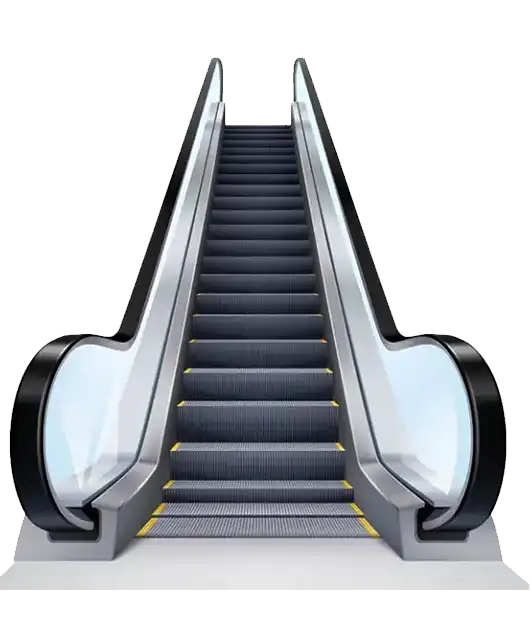
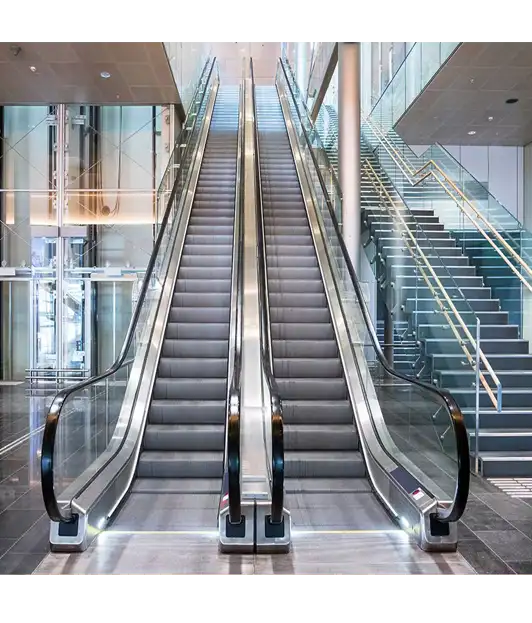
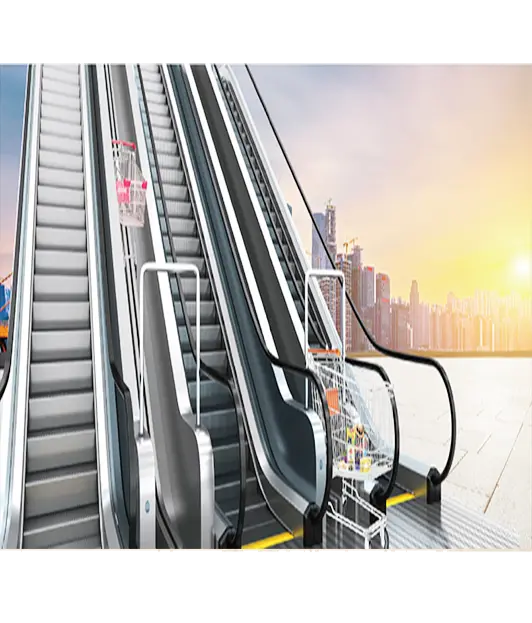
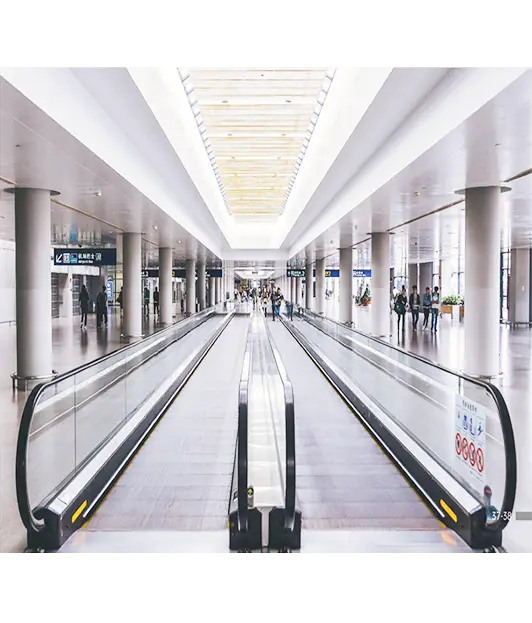
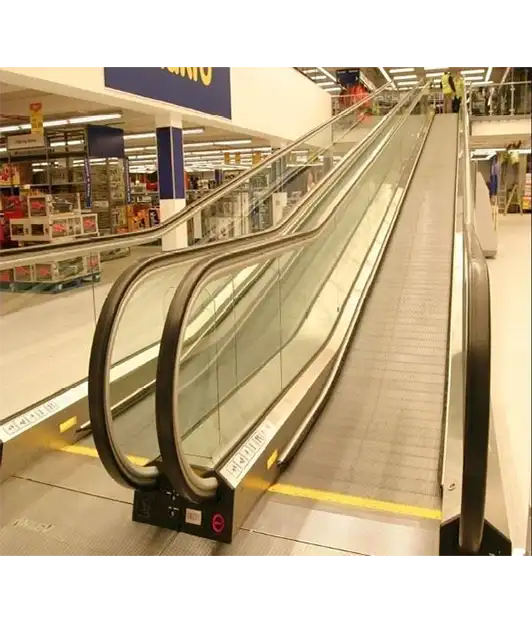
In commercial buildings, escalators are indispensable. Shopping malls, hotels, business centers, and airports rely on escalators to transport people quickly across multiple levels. They are designed to handle heavy passenger traffic while ensuring safety and comfort. The weight capacity and efficiency of escalators make them ideal for places where elevators alone cannot meet demand.
Escalator Components & Technology
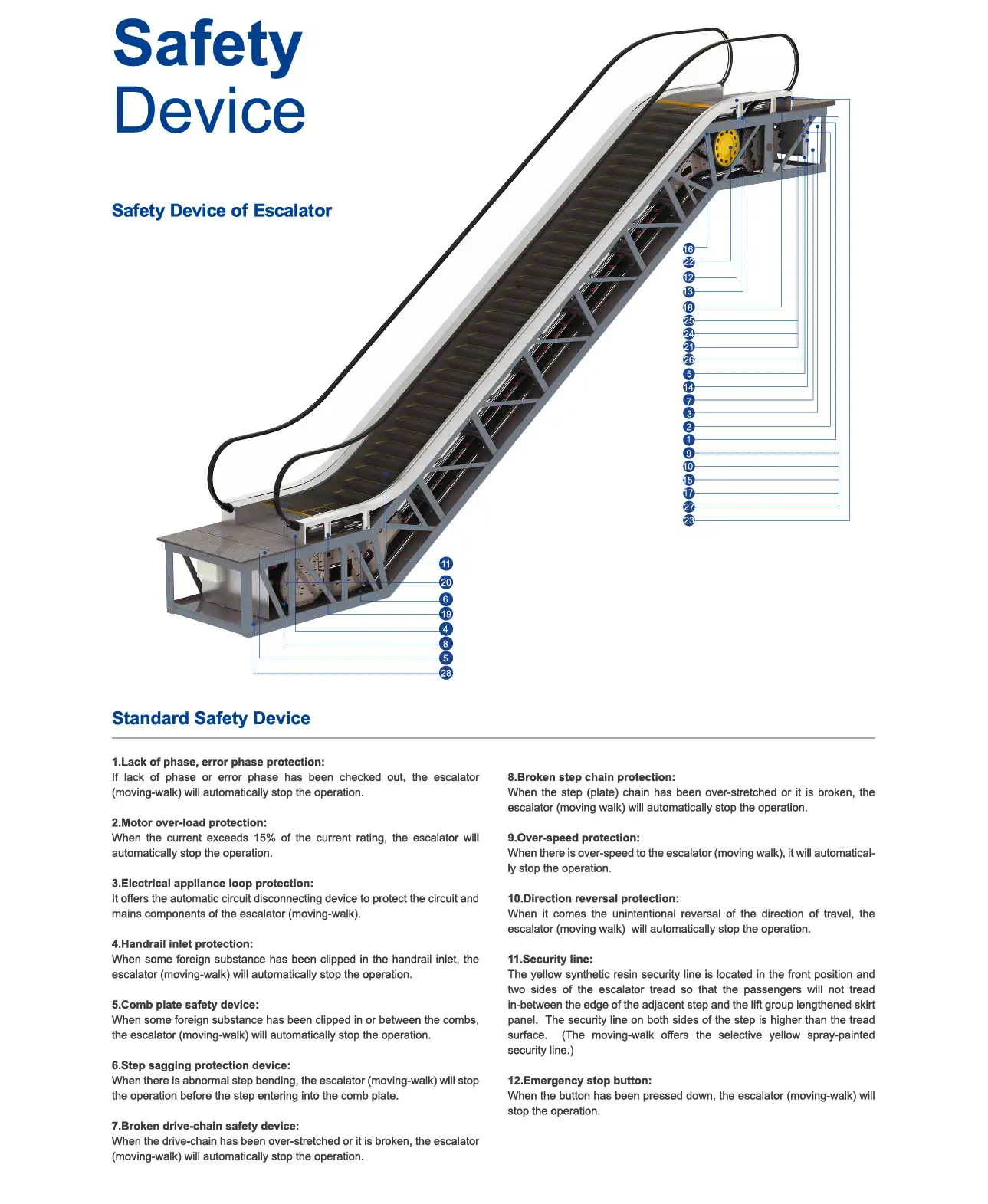
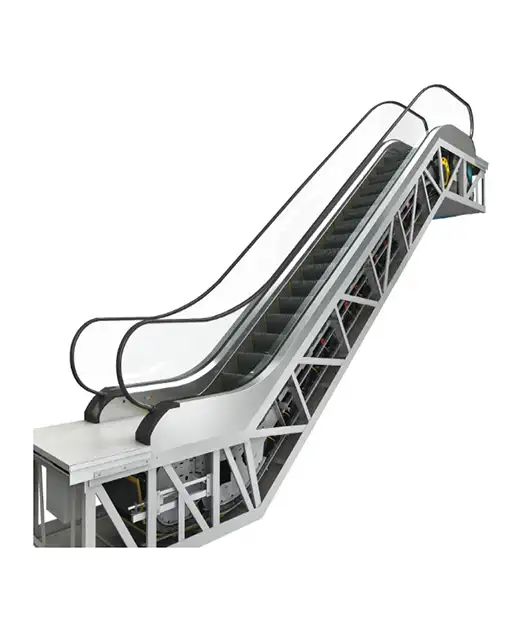
The reliability of an escalator depends on its core components:
-
Steps & Chains: Provide smooth passenger transport.
-
Handrails: Synchronized movement ensures passenger stability.
-
Drive System: Optimized to reduce energy consumption.
-
Control Panels: Allow easy monitoring and safety management.
-
Safety Sensors: Detect obstructions and activate automatic stops.
These elevator components are manufactured with strict international safety standards, ensuring reliability in both residential and commercial applications.
Layout Drawing: